You paid for that lead.
Zillow charged you anywhere from $20 to $150 for a buyer or seller who raised their hand and said they're interested in a property. That money left your account the moment they clicked.
What happens next is entirely up to your brokerage — and for most brokerages, what happens next is nothing.
Not nothing as in a slow response. Nothing as in the lead submits their inquiry, waits, refreshes their phone, and eventually calls someone else. Your Zillow lead response time determines whether that $100 turns into a commission or disappears into the same void as every other ignored inquiry.
Here's what the data — and our own audits — show actually happens.
The Lead Doesn't Wait for You
Zillow's own internal data has shown that leads contacted within 5 minutes are dramatically more likely to convert than leads contacted later. What Zillow doesn't advertise is how many of its Premier Agent partners never make that contact at all.
When a buyer submits an inquiry on Zillow, they are almost certainly submitting on multiple listings simultaneously. That's how portal behavior works. They're not choosing you — they're casting a net. The agent who responds first, personally, and with something useful wins the conversation.
After 30 minutes, the lead has mentally moved on. After a few hours, they've likely already spoken to someone else. After 24 hours, you're not following up — you're cold calling a stranger who doesn't remember submitting your form.
What Our Audits Show
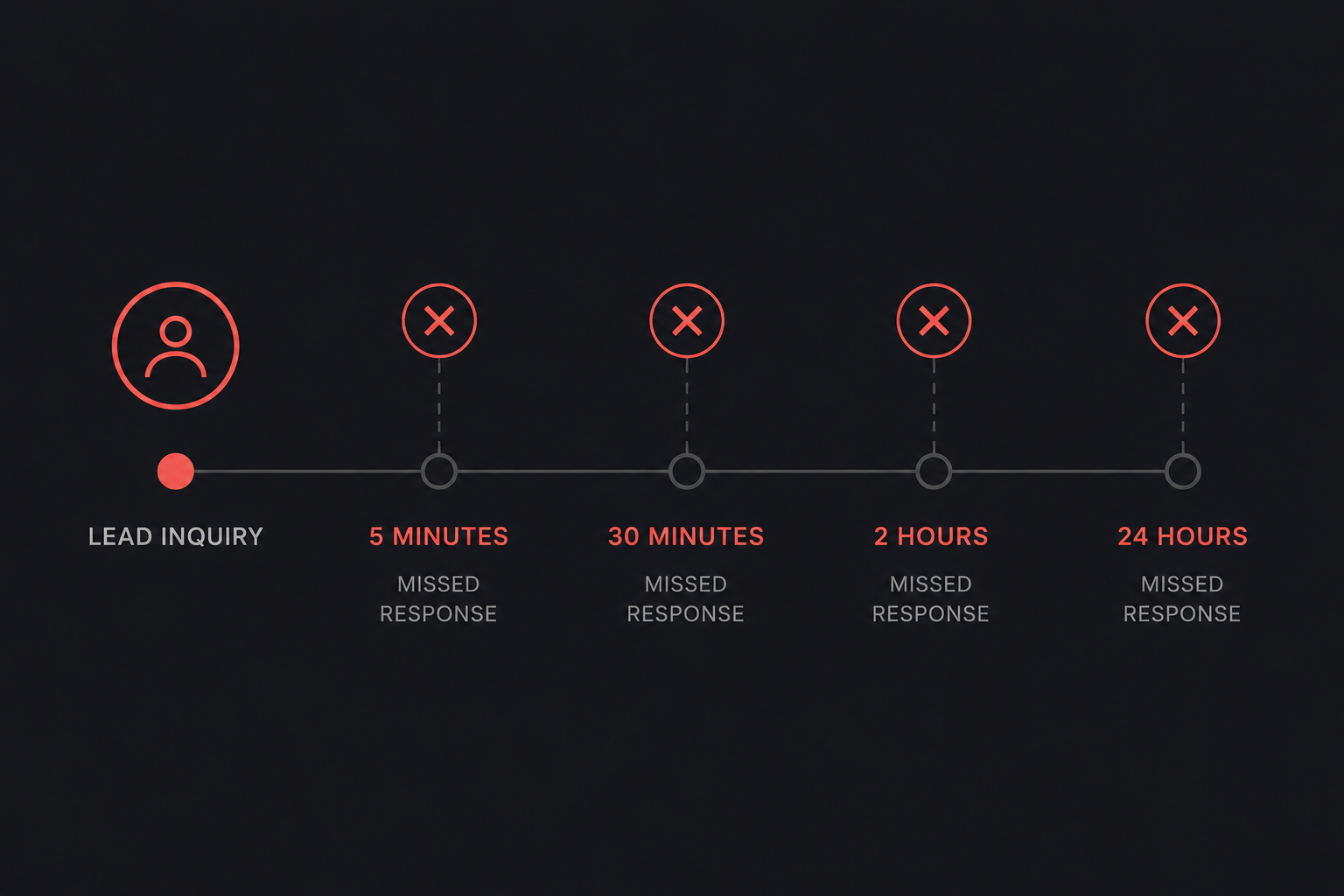
Most brokerages miss the critical response window entirely — often without knowing it.
When Lead Gone Dark mystery-shops a brokerage's Zillow presence, we submit a real inquiry and track everything: time to first response, who responds, what they say, and whether anyone follows up if the first attempt goes unanswered.
The results are consistently worse than brokers expect.
A significant portion of brokerages we've audited take more than two hours to respond to a Zillow inquiry. A meaningful percentage receive no response within 24 hours. In some cases, the inquiry went completely unanswered — no call, no text, no automated email, nothing.
The brokers are not lazy. They're not indifferent. They simply don't know it's happening. Their CRM shows leads are being assigned. Their agents say they're following up. But the audit shows a different reality.
The gap between what brokers believe is happening and what prospects actually experience is almost always larger than anyone expects.
The Hidden Cost of a Non-Response
Most broker-owners think about Zillow spend in terms of cost per lead. That's the wrong frame.
The right question is: what is your cost per contacted lead?
If you're spending $3,000 per month on Zillow and receiving 40 leads, your cost per lead is $75. But if 40% of those leads go uncontacted — the industry average — your real cost per contacted lead jumps to $125. You're paying a premium for leads your team isn't even attempting to reach.
Now add the conversion math. Portal leads in residential real estate convert at roughly 2–3%. At a 2% conversion rate on 40 leads, you'd expect less than one closed deal per month from that spend. If you're only contacting 60% of your leads, you're not converting at 2% — you're converting at 1.2% of your total lead pool.
The math compounds fast. The non-response isn't just lost leads. It's a systematic drag on every metric downstream.
Why This Keeps Happening
Three reasons show up repeatedly in our audits.
Lead routing failures. Leads get assigned in the CRM but agents don't receive a clear notification, or the notification goes to an old phone number, or the round-robin skips agents who are marked available but aren't.
No accountability structure. Broker-owners assume agents are following up because no one has told them otherwise. There's no reporting, no threshold, no consequence for a 6-hour response time.
Automation that feels like follow-up but isn't. Many brokerages have set up automated email drips that trigger when a lead comes in. The broker sees emails going out and assumes the lead is being worked. But an automated email is not follow-up — it's a placeholder. Zillow leads expect a human, fast.
What to Do About It
Start with a 90-day response time audit from your CRM. Pull every Zillow lead from the last quarter and calculate how long it took from lead creation to first logged activity. If your CRM can't produce that report in under 10 minutes, that's a separate problem worth solving.
Then submit a test lead yourself. Use a secondary email address and a name your agents won't recognize. Time everything from submission to first contact. Read every message that comes back.
If you're uncomfortable with what you find, that discomfort is pointing at a real revenue problem — not an agent attitude problem.
Rather have an outside set of eyes run that test?
Lead Gone Dark submits real inquiries to your Zillow profile and every other lead channel your brokerage runs, then hands you a graded report card benchmarked against industry standards. No software pitch. No consulting retainer. Just the data.